Other Collectibles · Item #227448565372
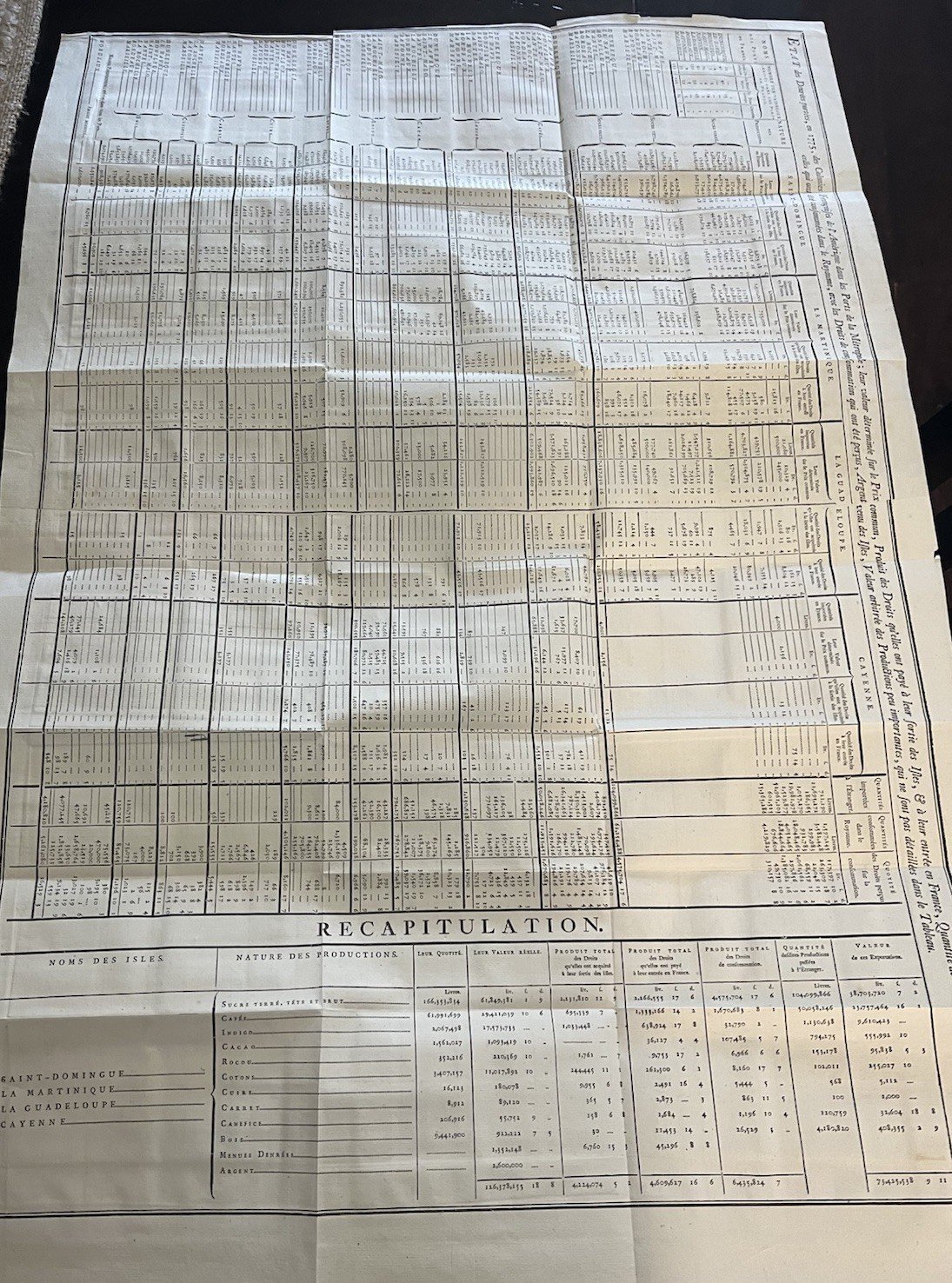
c.1780 Raynal 1775 French Colonial Trade Table Haiti Saint-Domingue Map #F109
$249.00
✓ Free standard U.S. shipping on eligible orders
Item number227448565372
CategoryOther Collectibles
Purchase is completed securely through the Knight Rarity Collection checkout.
Item description
Original late-18th-century French colonial trade table associated with Guillaume-Thomas Raynal’s influential Histoire philosophique et politique des établissements et du commerce des Européens dans les deux Indes.
The French heading begins “État des Denrées portées, en 1775, des Colonies Françoises de l’Amérique…” and records goods transported from the French American colonies to ports in metropolitan France. The table includes statistics for Saint-Domingue (present-day Haiti), Martinique, Guadeloupe and Cayenne/French Guiana.
Listed commodities include sugar, coffee, indigo, cacao, cotton, hides, leather, wood, silver and other colonial products. Columns detail quantities imported, official values, customs duties, domestic consumption and exports. The upper corner is marked “Livre XIII.”
The statistics cover the year 1775, while the sheet itself is believed to have been printed circa 1780. It is an important surviving document relating to French Caribbean commerce, the plantation economy, Atlantic trade and the economic history of pre-revolutionary Saint-Domingue.
Measures approximately 20½ × 31 inches when fully opened.
Condition is good for an oversized document approximately 245 years old. It retains numerous original horizontal and vertical fold lines from publication. There are scattered handling creases, light age toning, small edge tears and nicks, minor fold wear and a few small spots or natural paper inclusions. Printing remains exceptionally sharp and legible, and no major portion of the printed table appears missing. The reverse is clean and shows the texture and laid structure of period paper. Unframed and detached from the original publication.
Please examine all photographs carefully, as they form an important part of the condition description.